


Woodwork
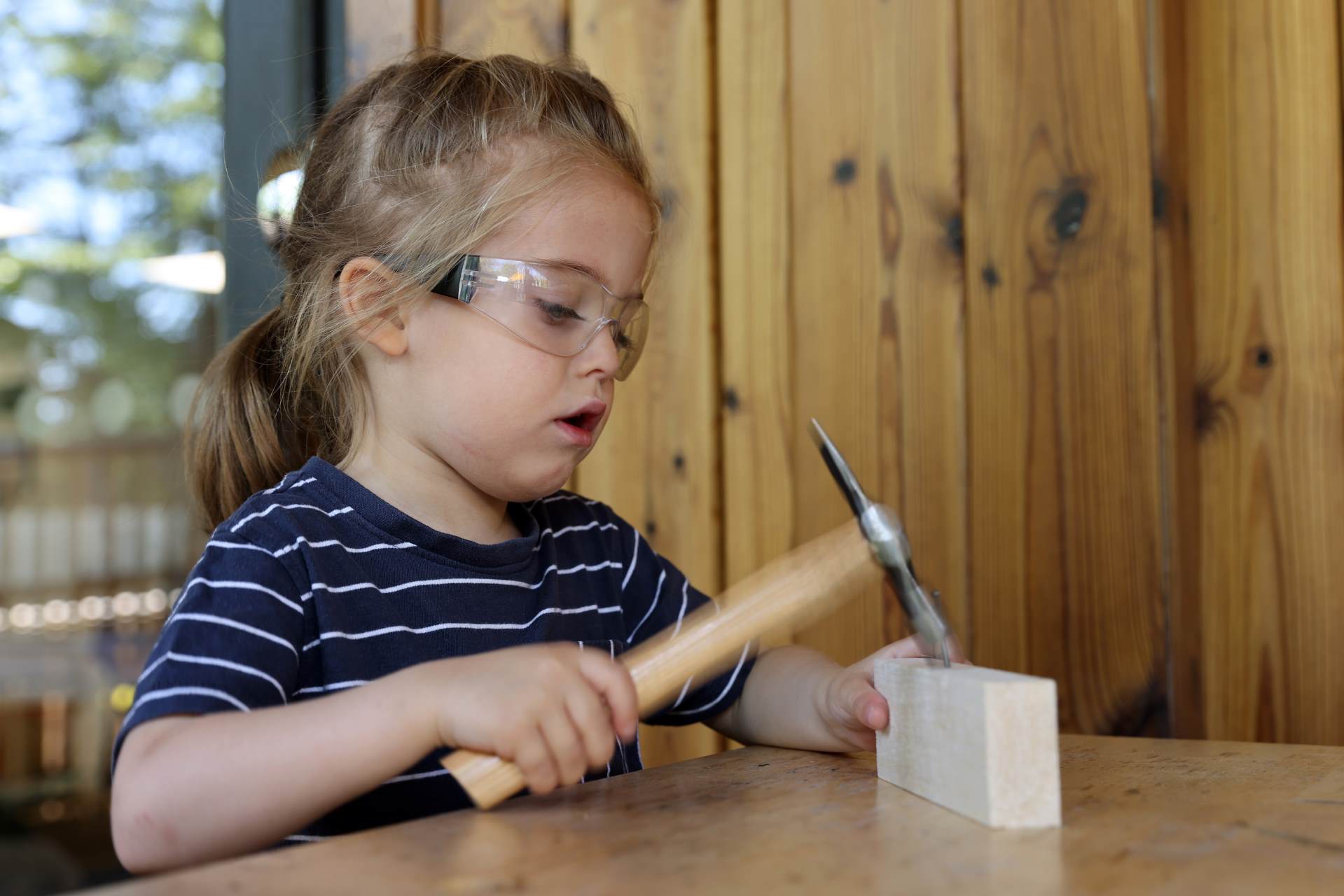
Woodwork and Early Construction
At Oakengates Nursery School, children begin developing woodwork skills long before they reach Preschool. Through carefully planned pre-woodwork experiences, our younger learners build the foundations they need for later tool use, design and construction.
Younger children explore:
-
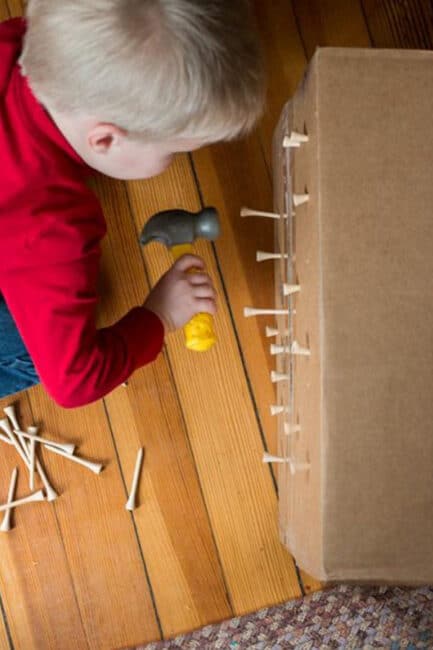
Hammering shapes and pegs into boards
-
Building with wooden blocks and loose parts
-
Turning, twisting and fitting objects together
-
Exploring natural wooden materials, logs and reclaimed resources
-
Pushing, pulling and joining pieces
-
Carrying, stacking and balancing blocks
-
Using simple tools such as screw boards, nuts and bolts
-
Investigating texture, weight and shape through hands-on play
These experiences strengthen fine and gross motor skills, hand–eye coordination and problem-solving, while encouraging curiosity about how things work.
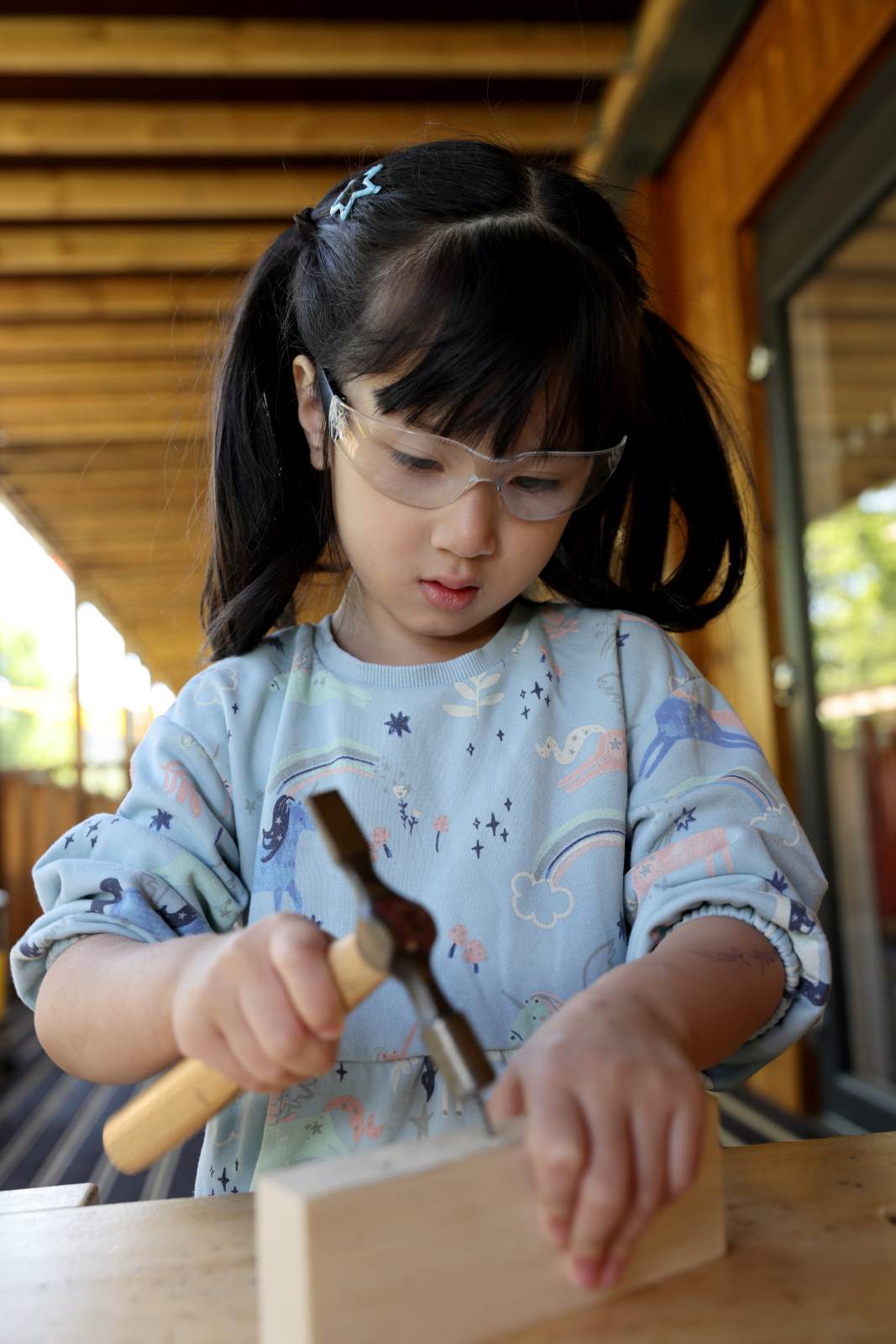
As children move into Preschool (from age 3), they progress into structured woodwork following staff training and the inspirational work of Pete Moorhouse. Children are introduced to real tools and real materials, giving them meaningful, hands-on experiences that spark creativity, confidence and perseverance.
Preschool children learn to:
-
Use hammers, screwdrivers and vices safely with adult support (1:3)
-
Join wood using nails and screws
-
Design, adapt and refine their ideas
-
Add extra materials to improve their creations
-
Talk about their plans, tools and finished products
Woodwork captures children’s attention in a unique way. They rise to the challenge, take pride in their achievements and develop a strong “can-do” attitude.
Through woodwork, children naturally develop:
-
Fine and gross motor skills and hand–eye coordination
-
Early mathematical thinking, including shape, size and measure
-
Understanding of the world, seeing tools as technology and wood as a natural material
-
Scientific concepts such as force, rotation and resistance
-
Rich language and vocabulary as they explain ideas and solve problems together
-
Mark making and drawing as they plan and record their creations
Two areas where woodwork particularly excels are confidence and thinking skills. Children feel empowered when trusted with real tools, building strong self-esteem. At the same time, they develop creative and critical thinking as they imagine, problem-solve and bring ideas to life.
Most importantly, children experience the joy of creating something purposeful with their own hands – developing skills, resilience and independence that provide strong foundations for future learning.